
Introduction
Technical SEO Guide is your complete resource for optimizing the technical foundation of your website. Even the best content won’t rank well if search engines struggle to crawl, index, or understand your website.
Technical SEO focuses on improving website performance, speed, mobile usability, security, structured data, and overall site architecture. These optimizations help search engines access your content efficiently while delivering a better experience for visitors.
Whether you run a business website, an eCommerce store, or a blog, implementing Technical SEO best practices can improve your search visibility, increase organic traffic, and support long-term growth.
In this guide, you’ll learn the essential Technical SEO factors, common mistakes to avoid, and a complete checklist to optimize your website.
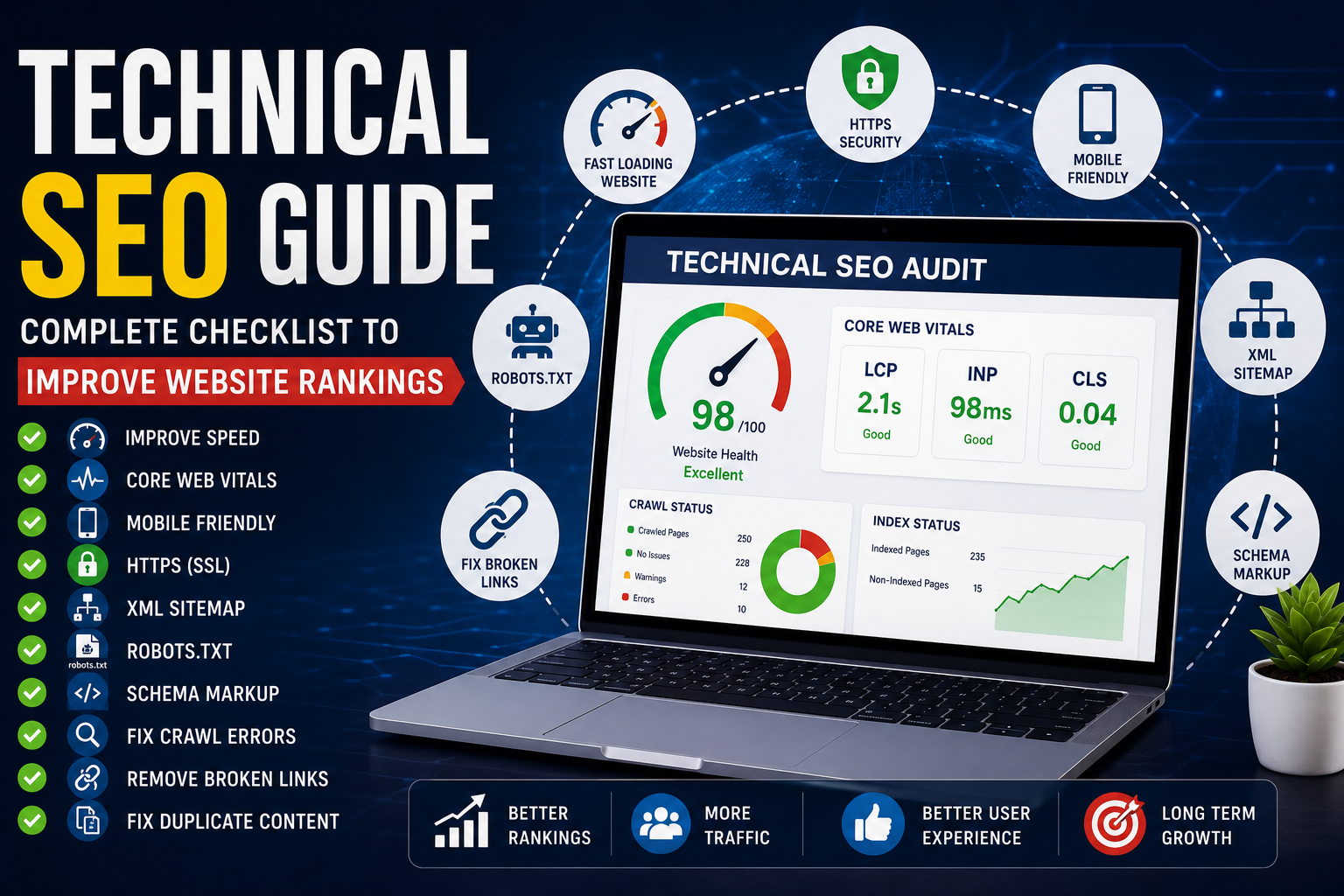
Quick Technical SEO Checklist
✅ Improve website speed
✅ Optimize Core Web Vitals
✅ Make your website mobile-friendly
✅ Use HTTPS (SSL)
✅ Create and submit an XML sitemap
✅ Optimize robots.txt
✅ Fix crawl errors
✅ Remove broken links
✅ Add schema markup
✅ Fix duplicate content
What is Technical SEO?
Technical SEO is the process of optimizing your website’s technical structure so that search engines can crawl, index, and rank your pages more efficiently.
Unlike On-Page SEO, which focuses on content, and Off-Page SEO, which focuses on authority, Technical SEO ensures your website performs well from a technical perspective.
It includes website speed, indexing, security, structured data, mobile optimization, URL structure, crawlability, and many other technical improvements.
Why is Technical SEO Important?
Without a strong technical foundation, even high-quality content may struggle to rank.
Benefits of Technical SEO
- Faster website loading
- Better crawling and indexing
- Improved user experience
- Higher search rankings
- Better mobile performance
- Enhanced website security
- Improved Core Web Vitals
Complete Technical SEO Checklist
1. Improve Website Speed
A fast website improves both user experience and search rankings.
Tips:
- Compress images
- Enable browser caching
- Minify CSS & JavaScript
- Use lazy loading
- Use a CDN
2. Optimize Core Web Vitals
Monitor these important metrics:
- Largest Contentful Paint (LCP)
- Interaction to Next Paint (INP)
- Cumulative Layout Shift (CLS)
3. Make Your Website Mobile-Friendly
Google primarily uses the mobile version of your website for indexing.
Ensure your website:
- Uses responsive design
- Has readable fonts
- Uses proper spacing
- Works on all screen sizes
4. Use HTTPS
A secure website builds trust and protects user data.
Benefits include:
- Better security
- Improved trust
- Google ranking signal
5. Create an XML Sitemap
An XML sitemap helps search engines discover your pages more efficiently.
Include:
- Blog posts
- Service pages
- Categories
- Important landing pages
6. Optimize robots.txt
Use robots.txt to guide search engines on which pages should or shouldn’t be crawled.
7. Fix Crawl Errors
Regularly monitor:
- 404 errors
- Redirect chains
- Server errors
- Blocked pages
8. Fix Broken Links
Broken internal and external links create a poor user experience and waste crawl budget.
9. Add Schema Markup
Schema helps search engines understand your content better.
Useful schema types include:
- Organization
- Article
- FAQ
- Breadcrumb
- Service
- Course
10. Fix Duplicate Content
Avoid publishing identical or very similar content across multiple URLs.
Use:
- Canonical tags
- Proper redirects
- Unique content
Common Technical SEO Mistakes
❌ Slow website
❌ Missing SSL certificate
❌ Broken links
❌ No XML sitemap
❌ Blocked pages in robots.txt
❌ Duplicate content
❌ Missing schema markup
❌ Poor mobile experience
Technical SEO Tools
- Google Search Console
- Google PageSpeed Insights
- Google Lighthouse
- Screaming Frog SEO Spider
- GTmetrix
- Bing Webmaster Tools
Technical SEO vs On-Page SEO
| Technical SEO | On-Page SEO |
|---|---|
| Website Speed | Content Optimization |
| Crawlability | Keyword Placement |
| XML Sitemap | Meta Title |
| Schema Markup | Headings |
| HTTPS | Internal Linking |
Conclusion
Technical SEO creates the foundation for successful search engine optimization. By improving your website’s speed, crawlability, mobile usability, and security, you make it easier for search engines to understand your content and for visitors to enjoy a seamless experience.
A technically optimized website not only supports better rankings but also contributes to higher engagement and long-term online growth.
Frequently Asked Questions (FAQs)
1. What is Technical SEO?
Technical SEO focuses on optimizing your website’s technical infrastructure so search engines can crawl, index, and rank your pages effectively.
2. Is Technical SEO important?
Yes. Without Technical SEO, even excellent content may struggle to rank because search engines may have difficulty accessing or understanding your website.
3. What are Core Web Vitals?
Core Web Vitals are Google’s user experience metrics that measure loading performance, responsiveness, and visual stability.
4. Does Technical SEO improve rankings?
Technical SEO doesn’t guarantee higher rankings, but it provides the foundation that helps search engines crawl, index, and evaluate your content more effectively.
5. How often should I perform a Technical SEO audit?
It’s recommended to perform a complete audit every 3–6 months or after major website updates.