
Introduction
E-E-A-T Explained is one of the most important concepts in modern SEO. If you’re new to search engine optimization, begin with our What is SEO? guide to understand how E-E-A-T fits into a complete SEO strategy. Google wants to show users content that is accurate, trustworthy, and created by people with real knowledge or experience.
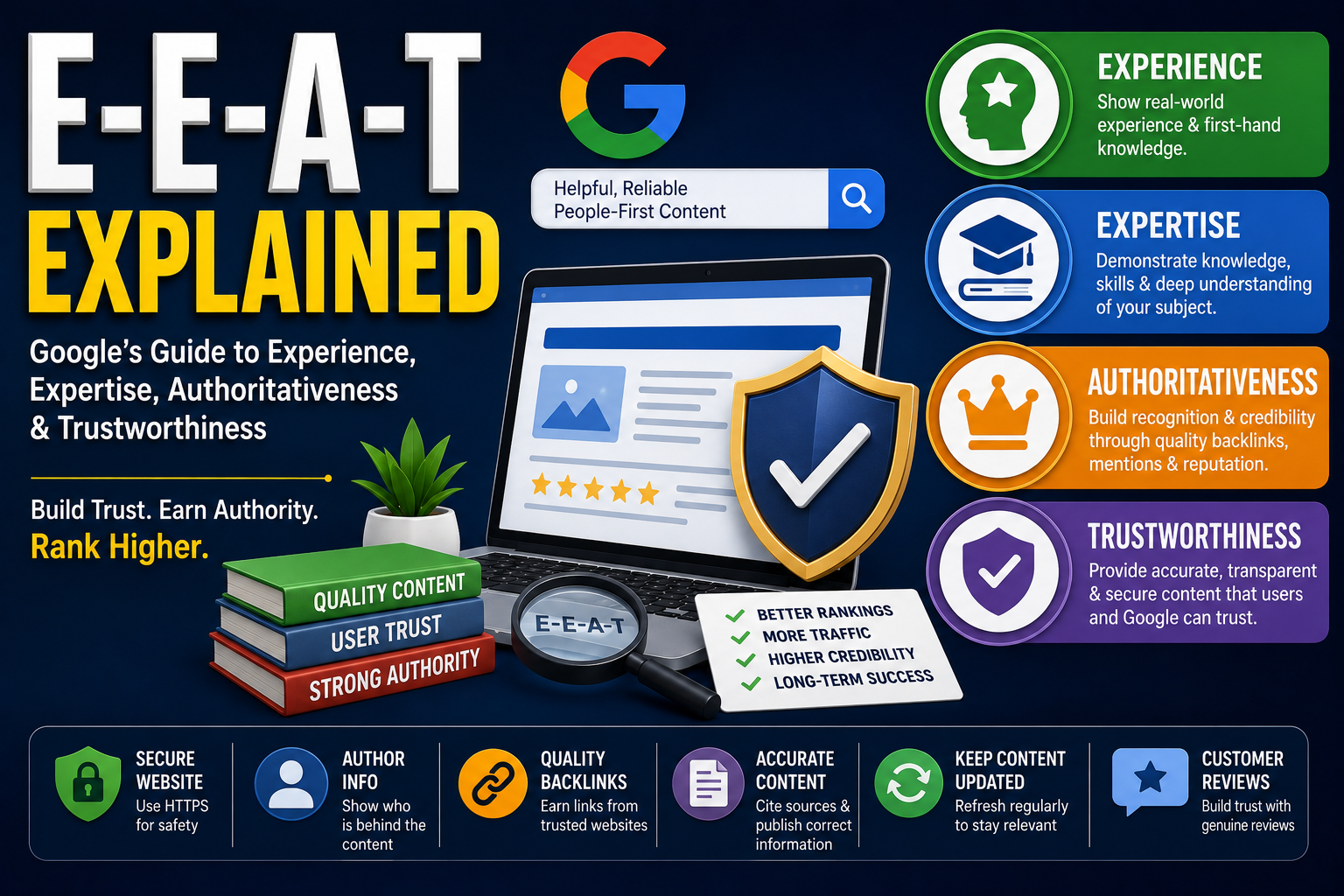
E-E-A-T stands for Experience, Expertise, Authoritativeness, and Trustworthiness. While it isn’t a direct ranking factor, these principles help Google evaluate the overall quality and credibility of your content.
Whether you run a business website, blog, eCommerce store, or educational platform, improving your E-E-A-T can increase user trust, strengthen your online reputation, and support better long-term SEO performance.
In this guide, you’ll learn what E-E-A-T means, why it matters, and practical ways to improve your website’s credibility.
Quick E-E-A-T Checklist
✅ Share real-world experience
✅ Publish accurate and helpful content
✅ Show author information
✅ Build quality backlinks
✅ Secure your website with HTTPS
✅ Display business contact details
✅ Collect genuine customer reviews
✅ Keep content updated
✅ Cite trustworthy sources
✅ Build your brand authority
What is E-E-A-T?
E-E-A-T is a framework used in Google’s Search Quality Evaluator Guidelines to assess the quality and reliability of content.
It stands for:
- Experience – Demonstrating first-hand knowledge or practical experience.
- Expertise – Showing subject knowledge and skills.
- Authoritativeness – Building recognition and credibility in your industry.
- Trustworthiness – Creating accurate, transparent, and secure content.
Why is E-E-A-T Important?
Google aims to provide users with the most reliable and helpful search results.
Strong E-E-A-T helps:
- Build user trust
- Improve brand reputation
- Increase content credibility
- Encourage repeat visitors
- Support long-term SEO success
Understanding Each Part of E-E-A-T
1. Experience
Experience refers to first-hand involvement with a topic. Publishing real case studies and practical examples also helps improve your visibility because Google values content created from genuine experience.
Examples:
- Case studies
- Real project examples
- Product usage
- Tutorials based on actual experience
2. Expertise
Expertise means demonstrating knowledge and skill in your subject. Well-structured content following On-Page SEO best practices makes your expertise easier for both users and search engines to understand.
You can show expertise by:
- Publishing detailed guides
- Explaining complex topics clearly
- Keeping content updated
- Providing accurate information
3. Authoritativeness
Authority is built when other people and websites recognize your expertise.
Ways to improve authority:
- Earn quality backlinks. Building authority naturally through quality backlinks is explained in our Off-Page SEO Guide.
- Publish original research
- Guest posting
- Positive brand mentions
4. Trustworthiness
Trust is the foundation of E-E-A-T.
Improve trust by:
- Using HTTPS. Website security plays an important role in building trust. Learn more in our Website Security Best Practices guide.
- Showing contact information
- Displaying privacy policies
- Publishing transparent content
- Keeping information accurate
How to Improve E-E-A-T
Create Helpful Content
Write content that answers users’ questions completely. Creating helpful, people-first content starts with understanding what your audience is searching for through proper Keyword Research.
Demonstrate Real Experience
Include:
- Examples
- Screenshots
- Personal insights
- Practical tips
Build Website Authority
- Earn quality backlinks – Performing regular SEO Audits helps identify opportunities to strengthen your website’s authority.
- Publish consistently
- Build your brand
Improve Technical Trust
- HTTPS
- Fast website
- Mobile-friendly design
- Clear navigation
These technical improvements are covered in detail in our Technical SEO Guide.
Update Content Regularly
Refresh outdated information and improve existing articles. Regular content updates should be part of your overall Website Maintenance strategy.
| E-E-A-T | Traditional SEO |
|---|---|
| Focuses on credibility | Focuses on optimization |
| Builds user trust | Improves visibility |
| Emphasizes content quality | Emphasizes keywords |
| Supports long-term growth | Supports rankings |
Conclusion
E-E-A-T is about creating content that people can trust. By sharing genuine experience, demonstrating expertise, building authority, and maintaining trust, you create a stronger website for both users and search engines.
Building strong E-E-A-T requires more than publishing content. By combining Keyword Research, On-Page SEO, Technical SEO, Off-Page SEO, and regular SEO Audits, you create a trustworthy website that provides long-term value for both users and search engines.
Frequently Asked Questions (FAQs)
1. What does E-E-A-T stand for?
E-E-A-T stands for Experience, Expertise, Authoritativeness, and Trustworthiness.
2. Is E-E-A-T a ranking factor?
No. E-E-A-T is not a direct ranking factor, but it represents qualities that help Google assess the usefulness and credibility of content.
3. How can I improve E-E-A-T?
Publish accurate content, demonstrate real experience, earn authoritative backlinks, maintain a secure website, and keep your content updated.
4. Does E-E-A-T matter for all websites?
Yes. Every website can benefit from improving trust, authority, and content quality, especially those publishing informational or business-related content.
5. Can small businesses build E-E-A-T?
Absolutely. Sharing real experience, collecting customer reviews, maintaining transparent business information, and publishing helpful content are effective ways for small businesses to strengthen E-E-A-T.