
Introduction
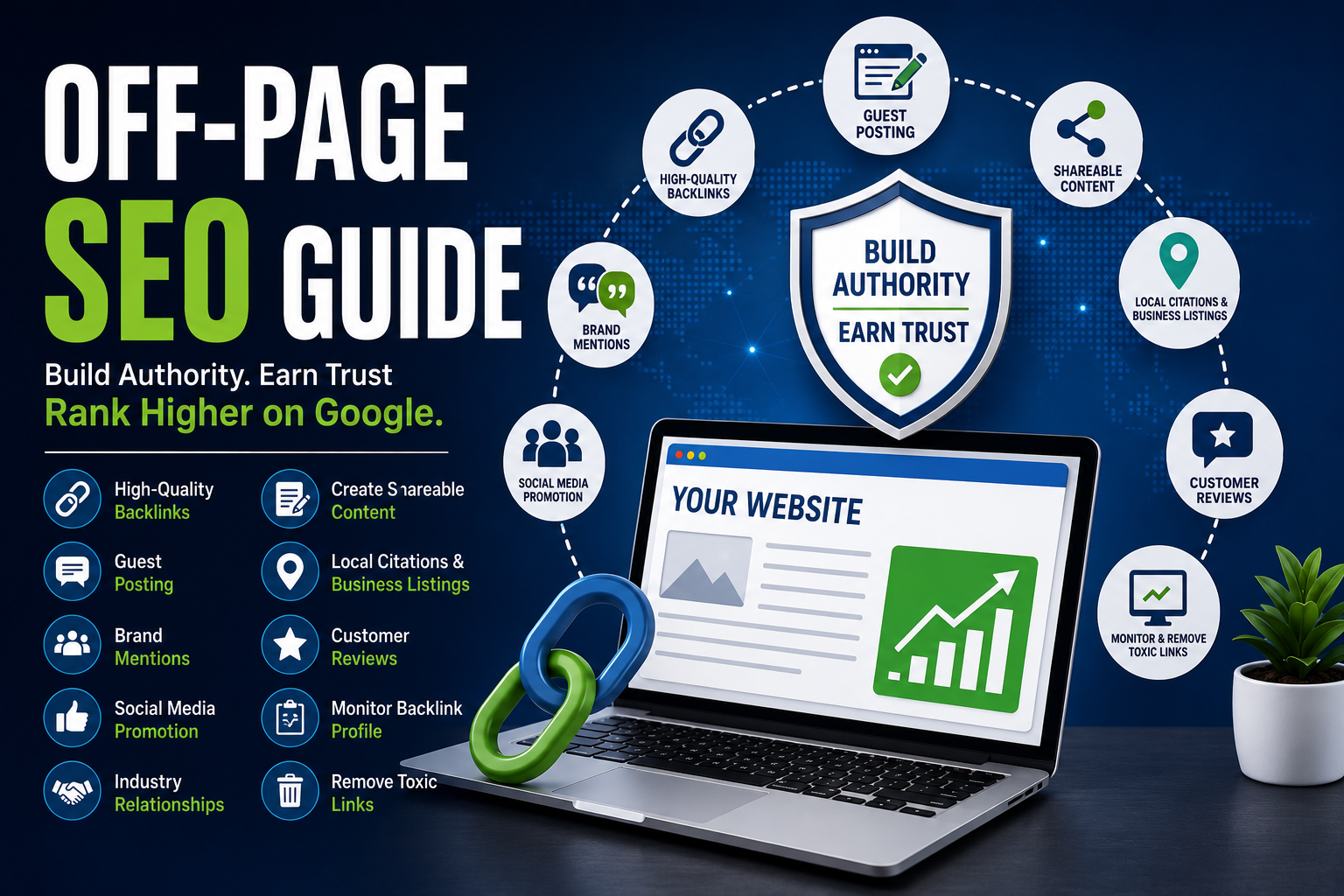
Off-Page SEO Guide is your complete roadmap to building website authority beyond your own website. While On-Page SEO focuses on optimizing your content, Off-Page SEO helps search engines understand how trustworthy and valuable your website is through signals from other websites.
Think of it this way: if many reputable websites recommend your content, Google is more likely to trust your website and rank it higher in search results.
Off-Page SEO includes backlinks, brand mentions, digital PR, guest posting, local citations, and other strategies that strengthen your website’s authority.
In this guide, you’ll learn the most effective Off-Page SEO techniques, common mistakes to avoid, and how to build authority naturally without risking Google penalties.
Quick Off-Page SEO Checklist
✅ Build high-quality backlinks
✅ Publish guest posts
✅ Create shareable content
✅ Earn brand mentions
✅ Optimize your Google Business Profile
✅ Build local citations
✅ Promote content on social media
✅ Monitor backlink quality
✅ Remove toxic backlinks
✅ Build relationships with industry websites
What is Off-Page SEO?
Off-Page SEO is the process of improving your website’s authority, credibility, and search engine rankings through activities performed outside your website.
Unlike On-Page SEO, which focuses on optimizing website content and structure, Off-Page SEO focuses on earning trust from external sources such as backlinks, online mentions, reviews, and citations.
Before building backlinks, it’s important to understand the basics of Search Engine Optimization (SEO) and how different SEO strategies work together.
The stronger your website’s authority, the more likely it is to rank for competitive keywords.
Why is Off-Page SEO Important?
Google uses off-page signals to determine whether a website is trustworthy and deserves higher rankings.
Benefits of Off-Page SEO
- Builds website authority
- Improves keyword rankings
- Increases organic traffic
- Boosts brand credibility
- Generates referral traffic
- Supports long-term SEO growth
Complete Off-Page SEO Checklist
1. Build High-Quality Backlinks
Backlinks remain one of the strongest ranking signals.
Focus on earning links from:
- Industry blogs
- News websites
- Educational websites
- Business directories
- Trusted niche websites
Quality always beats quantity.
2. Guest Posting
Publishing valuable articles on reputable websites helps you:
- Earn quality backlinks
- Increase brand awareness
- Reach a new audience
- Build industry authority
Always contribute original, informative content rather than promotional articles.
3. Create Link-Worthy Content
People naturally link to content that provides value.
Examples include:
- Ultimate guides
- Case studies
- Research reports
- Infographics
- Statistics pages
- Free tools
4. Build Brand Mentions
Even when another website mentions your business without linking to it, it can contribute to your online credibility.
Encourage mentions through:
- Industry collaborations
- Interviews
- Press releases
- Community engagement
5. Optimize Your Google Business Profile
For local businesses, an optimized Google Business Profile improves local visibility and builds trust.
Keep your profile updated with:
- Business information
- Photos
- Reviews
- Opening hours
- Services
6. Build Local Citations
List your business on trusted directories with consistent information.
Include:
- Business name
- Address
- Phone number
- Website URL
7. Encourage Customer Reviews
Positive reviews improve trust and influence local search rankings.
Ask satisfied customers to leave honest reviews on trusted platforms.
8. Promote Content on Social Media
Sharing your content on social media increases visibility and creates opportunities for backlinks and brand mentions.
Popular platforms include:
- X (Twitter)
- YouTube
9. Monitor Your Backlink Profile
Regularly review your backlinks to identify:
- High-quality links
- Broken backlinks
- Spammy links
- Lost backlinks
10. Build Industry Relationships
Networking with bloggers, businesses, and industry experts can lead to natural backlinks, partnerships, and collaboration opportunities.
White Hat vs Black Hat Off-Page SEO
| White Hat SEO | Black Hat SEO |
|---|---|
| Natural Backlinks | Buying Links |
| Guest Posting | Link Farms |
| Valuable Content | Spam Comments |
| Digital PR | Private Blog Networks (PBNs) |
| Brand Building | Automated Link Building |
Common Off-Page SEO Mistakes
❌ Buying backlinks
❌ Using private blog networks (PBNs)
❌ Spam directory submissions
❌ Excessive blog commenting
❌ Low-quality guest posts
❌ Ignoring toxic backlinks
❌ Focusing on quantity instead of quality
Conclusion
Off-Page SEO is about earning trust rather than trying to manipulate search rankings. By focusing on high-quality backlinks, valuable content, brand mentions, and genuine relationships, you can build lasting authority that supports long-term organic growth.
Combine strong Off-Page SEO with excellent On-Page and Technical SEO to create a complete SEO strategy that delivers sustainable results.
Frequently Asked Questions (FAQs)
1. What is Off-Page SEO?
Off-Page SEO refers to activities performed outside your website to improve authority, trust, and search engine rankings.
2. Why are backlinks important?
Backlinks act as recommendations from other websites, helping search engines evaluate the credibility of your content.
3. Is guest posting still effective?
Yes. Publishing valuable content on reputable websites remains a legitimate way to build authority and earn quality backlinks.
4. Does social media directly improve SEO?
Social media is not a direct ranking factor, but it increases content visibility, which can lead to more traffic, backlinks, and brand mentions.
5. Can buying backlinks improve rankings?
No. Buying backlinks violates Google’s spam policies and can result in ranking penalties.